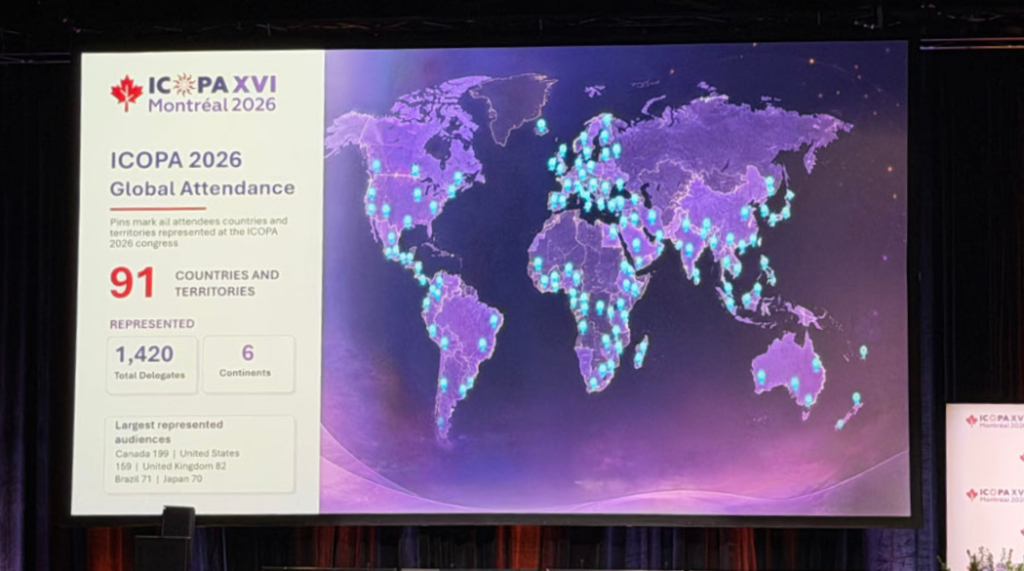
The NeuroSolve consortium continues to advance international research on neglected tropical diseases. At the 16th International Congress of Parasitology (ICOPA 2026), held from August 16 to 21 in Montréal, Canada, under the theme “Parasites in a Changing World”, team members Fredy Mlowe and Lisa Van Acker presented their latest findings on controlling and monitoring Taenia solium infections.
Sustainment of Health Education in Tanzania
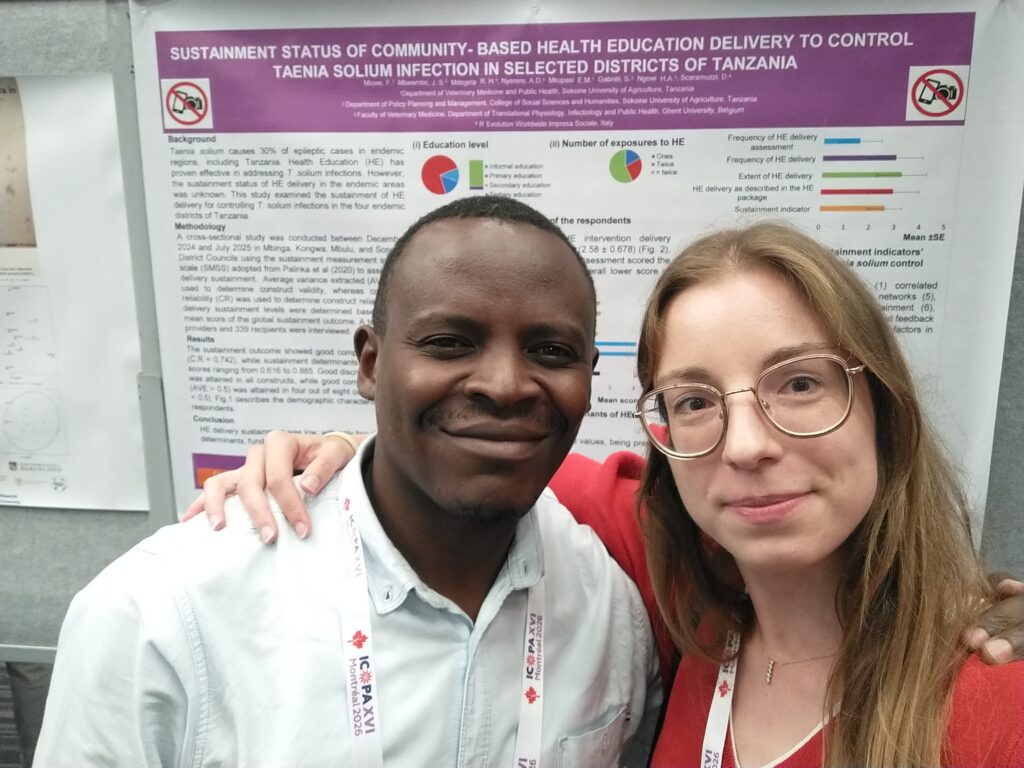
Fredy Mlowe is a Veterinarian with a Master’s Degree in Epidemiology and a PhD student within the NeuroSolve Project. His research addresses translation challenges and strategies for adopting health education and serological tests within government institutions to support routine T. solium control in Tanzania.
At ICOPA 2026, he presented the poster “Sustainment status of community-based health education delivery to control Taenia solium infection in selected districts of Tanzania”, conducted between December 2024 and June 2025 across the Mbinga, Kongwa, Mbulu, and Songwe District Councils using the Sustainment Measurement System Scale (SMSS).
Cost-Effectiveness and Diagnostics for Neurocysticercosis
Lisa Van Acker is a PhD student at the Faculty of Veterinary Medicine at Ghent University (Belgium), working under Prof. Sarah Gabriël at the Laboratory of Foodborne Parasitic Zoonoses. Her primary research within NeuroSolve centers on assessing the usability and cost-effectiveness of serological tests for diagnosing neurocysticercosis, involving field visits to Tanzania and Zambia.
Her poster presentation at the conference was titled “Tailoring Taenia solium target product profiles: cost-effectiveness of diagnostic tools for programme monitoring and evaluation”.
These contributions highlight NeuroSolve’s ongoing efforts to develop sustainable, evidence-based strategies to combat parasitic zoonoses globally.
If you would like more information about the study results, please do not hesitate to contact us through our social networks or via e-mail (neurosolveproject@gmail.com).