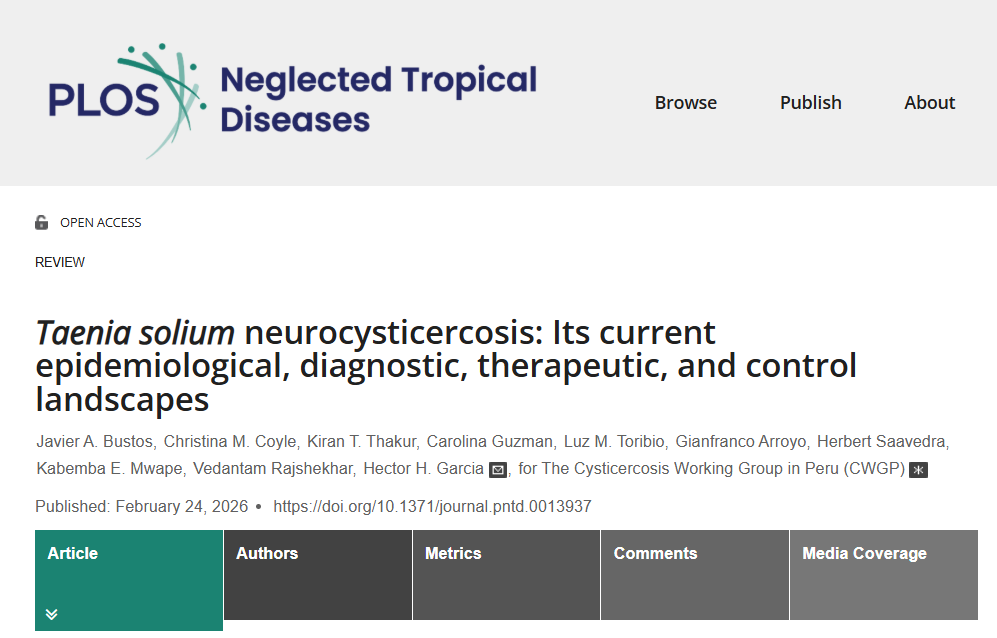
A new review article published in PLOS Neglected Tropical Diseases describes the current epidemiological, diagnostic, therapeutic, and control landscape of Taenia solium neurocysticercosis (NCC), one of the leading parasitic infections affecting the human central nervous system. The publication acknowledges the support of the EDCTP-funded project NeuroSolve and represents the second scientific paper involving the project.
Neurocysticercosis is a major cause of acquired epilepsy worldwide and remains a significant public health problem in many low- and middle-income countries, particularly in sub-Saharan Africa, Latin America, and parts of Asia. The disease results from infection of the central nervous system with the larval stage of the pork tapeworm Taenia solium, and its clinical manifestations vary depending on the number, location, and stage of the parasites, as well as the host inflammatory response.
Ongoing challenges in diagnosis and management
Despite important progress in recent years, the review highlights that neurocysticercosis continues to present major challenges. Access to neuroimaging and reliable laboratory tests is still limited in many endemic regions, making accurate diagnosis difficult. In addition, treatment strategies must be tailored to different forms of the disease, requiring specialised expertise that is not always available in resource-limited settings.
Recent advances include improved MRI protocols, development of more specific antigen and antibody detection assays, and the exploration of molecular and point-of-care diagnostic tools that could facilitate case detection and monitoring in endemic areas. Therapeutic approaches have also evolved, with better use of combined anti-parasitic regimens, improved control of treatment-associated inflammation, and increasing use of minimally invasive neurosurgical techniques.
Relevance to the NeuroSolve project
The NeuroSolve project aims to improve the diagnosis and clinical management of neurocysticercosis through the development and evaluation of innovative diagnostic tools and collaborative research across endemic regions. The topics addressed in this review closely align with the project objectives, particularly the need for accessible, reliable, and scalable diagnostic methods that can be used in low-resource settings.
The inclusion of NeuroSolve in the acknowledgements of this publication reflects the contribution of the project to ongoing international efforts to better understand the disease and to develop practical solutions for its control. As the second publication involving the consortium, this work marks another step forward in the scientific output of the project and highlights the importance of sustained collaboration between clinical, laboratory, and public health partners.