This past May, Antwerp hosted the 2026 NVP Spring Meeting, the annual event organized by the Dutch Society for Parasitology that brings together experts and researchers from across Europe and beyond.
Neurosolve took part in this prestigious scientific showcase thanks to the work of two esteemed members of our research team, Dr. Melai Mubanga and Dr. Richard Mambo, who shared the fruits of their field studies in Zambia with the international community.
The fight against neglected tropical diseases such as neurocysticercosis requires an integrated approach capable of combining medical science, social analysis of community dynamics, and international cooperation. The contributions presented in Antwerp fit perfectly into this vision, addressing the issue from two complementary perspectives: the adoption of clinical solutions and an integrated prevention.
Stakeholder Analysis for Neurocysticercosis Management
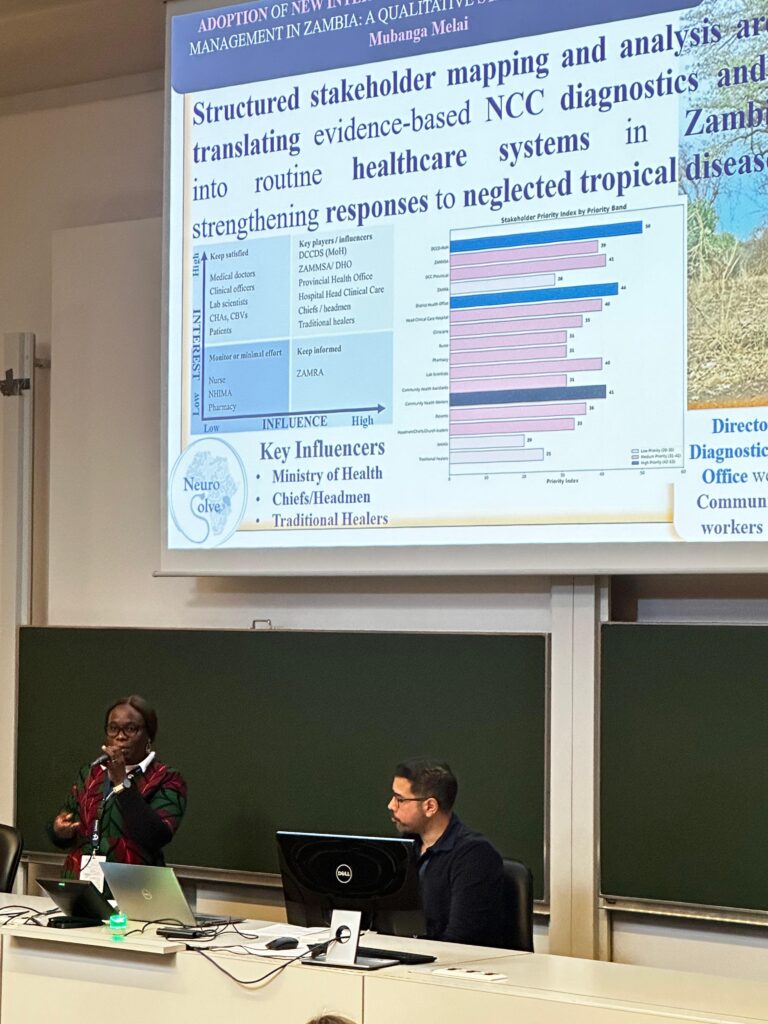
Dr. Mubanga brought to the meeting’s attention the poster titled: “Adoption of new interventions for neurocysticercosis management in Zambia: a qualitative stakeholder analysis”.
The focus of Dr. Mubanga’s work was a qualitative analysis of the factors influencing the adoption of new interventions for managing neurocysticercosis in Zambia. Often, the availability of new medical protocols is not enough; it is essential to understand how policymakers, healthcare workers, and local communities perceive these innovations. We therefore aim to identify barriers and facilitators to ensure that new guidelines translate into real, sustainable benefits for patients.
Mapping Control with the One Health Approach
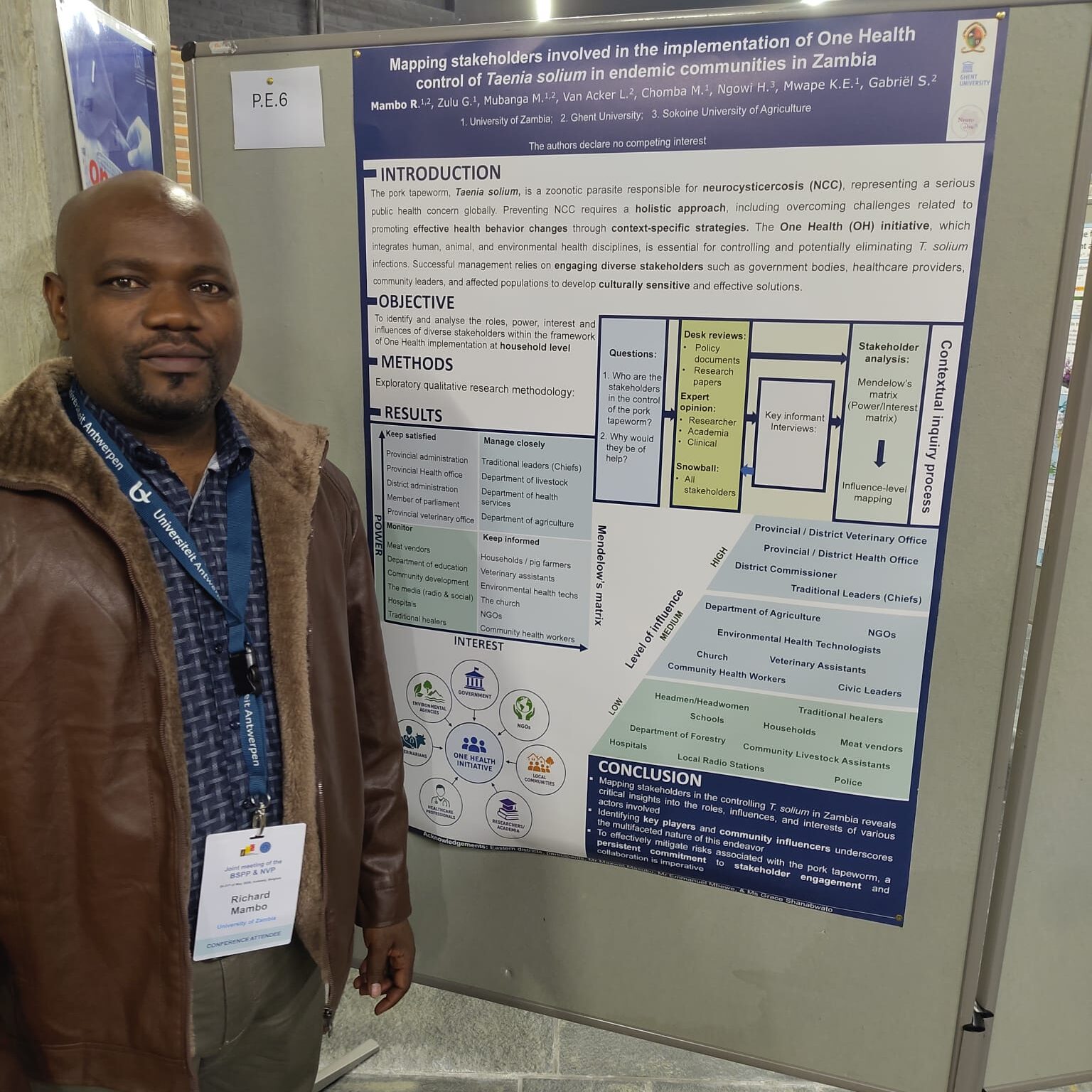
Shifting the focus to prevention and control within endemic communities, Dr. Mambo presented his poster “Mapping stakeholders involved in the implementation of One Health control of Taenia solium in endemic communities in Zambia”.
The work focused on the systematic mapping of key stakeholders needed to effectively implement a strategy based on One Health principle. Since the life cycle of Taenia solium links human health, animal health, and the environment, the success of any control measure depends on synergy among farmers, veterinarians, health authorities, and local leaders.
The analysis work offers a strategic guide to coordinate these diverse sectors, optimizing efforts and resources on the ground.
Looking to the Future
Bringing qualitative data and strategic analyses from Zambia to an international forum like the NVP helps keep the spotlight on a neglected disease that deeply impacts the lives of so many people.
Our warmest congratulations go to Melai and Richard for their excellent work and for perfectly representing the spirit and dedication of the entire Neurosolve team!
Stay tuned to our website and channels for the latest updates on our upcoming research developments and field activities.